AI Agent Blueprints & Configurations
Ready-to-run AI agent blueprints, configurations, and local setup guides. Build research agents, code reviewers, and content writers with copy-paste implementations.
AI Agents
This section gives you working agent implementations — not just patterns, but complete agents you can install and run. Copy the system prompt, wire up the tools, and ship.
The Agentic Prompting page under Prompts teaches the theory — ReAct loops, planning agents, multi-agent systems. The Tool-Use Patterns page covers parallel, sequential, and conditional function calling. Here, you get the blueprints and platform guides.
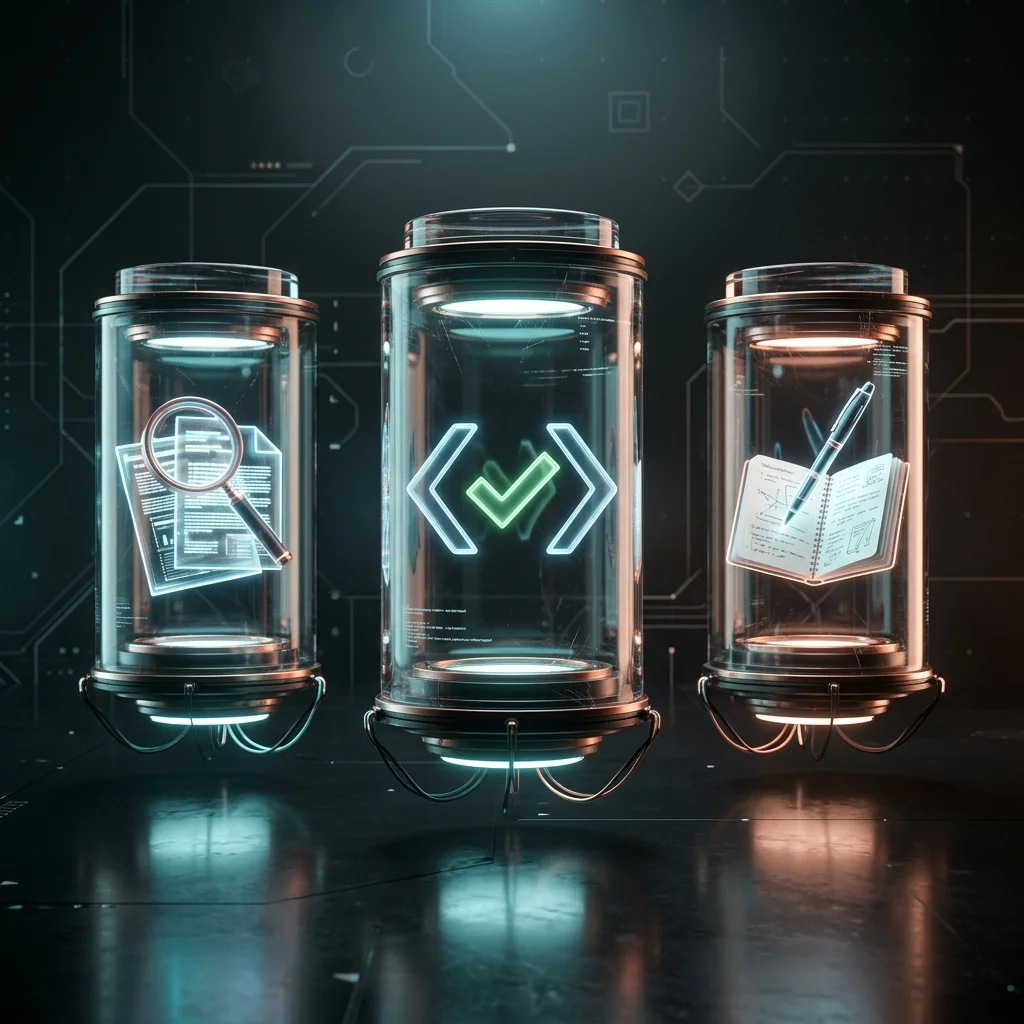
Research Agent
Code Review Agent
Content Writer
Agent Platforms
Prefer running agents through an existing platform? The three dominant self-hosted platforms each have setup and configuration guides:
- Hermes Agent — #1 on OpenRouter (271B tokens/day). 19 messaging platforms, seven-layer security model.
- OpenClaw — Fastest GitHub star growth ever (250K+). Largest skills marketplace. NVIDIA NemoClaw integration.
- Pi Coding Agent — Minimal agent harness. TypeScript extensions, context engineering, session trees. Powers OpenClaw.
Why Agents?
Single-prompt workflows answer known questions. Agents handle unknown exploration — they reason about what to do next, call tools, observe results, and decide whether to continue or stop. This is the pattern behind Claude Code, ChatGPT with tools, and every system where the model drives its own workflow.
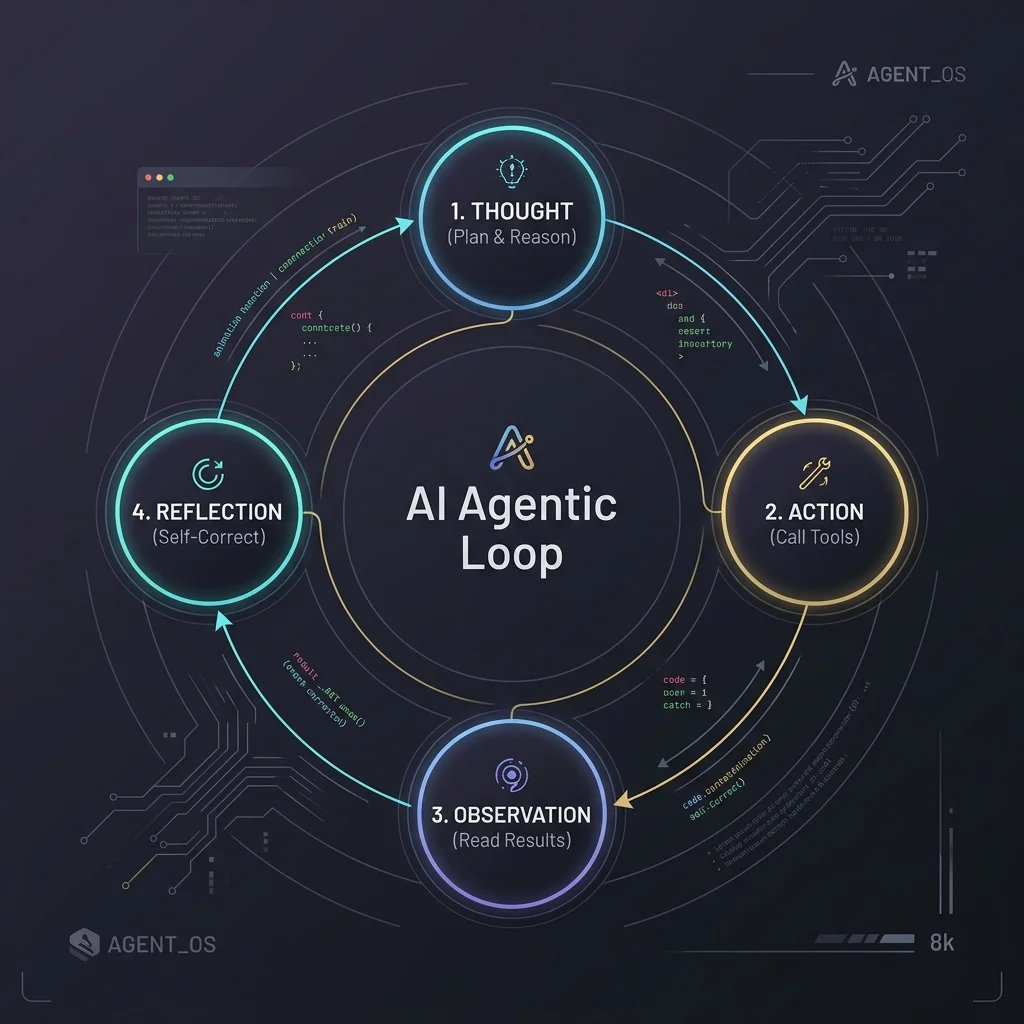
Agents unlock tasks that don't fit a fixed pipeline: research ("find the root cause of this production error"), debugging ("why is this query 10x slower after the deploy?"), competitive analysis ("compare these three frameworks across six dimensions"), and multi-step content creation that needs fact-checking and revision.
The tradeoffs are real — agents cost more, take longer, and fail in complex ways that static prompts don't. Test them with an eval harness before deploying.
Ecosystem
Agents don't run in isolation. They depend on the rest of the Prompt Genius stack:
Tool Providers & Configs
Values: /mcp
Values: /cursorrules
Values: /prompts/prompt-writing
Related Reading
Agent Techniques & Theory
- Chain-of-Thought: When It Works (and When It Backfires) — CoT improves accuracy 25%+ on math and logic, hurts on simple tasks. Decision framework included.
- From CoT to Self-Correction: Building Reasoning Loops — Build a self-correcting loop that critiques and revises output. Python code with before/after comparison.
- Tree-of-Thought: Solving Problems CoT Can't — Branch, evaluate, prune. Python tutorial with CoT-vs-ToT comparison on creative and constraint problems.
Frameworks & Implementations
- AI Agent Frameworks Compared (2026) — LangChain, CrewAI, AutoGen, and smaller frameworks. What each does well, what it doesn't, when to skip the framework.
- OpenClaw Guide: Your First Autonomous AI Agent — The open source agent that lives in your messaging app. Installation, skill system, advanced memory.
- Evaluating Prompt Quality: Build an Eval Harness — LLM-as-judge scoring for accuracy, relevance, faithfulness. A/B test prompt variants before deploying agents.
Tools & Infrastructure
- 10 MCP Servers Every Developer Needs — The essential Model Context Protocol servers agents use: GitHub, Postgres, Filesystem, Brave Search, Figma.
- MCP Server Best Practices — Architecture, implementation patterns, and production considerations for the tools your agents depend on.
- Prompt Caching: Cut LLM Costs by 90% — Every major provider caches repeated prompt prefixes. Strategy to maximize cache hits when running agent loops.
Local LLM Lab
Not every agent has to run in the cloud. Running open-weight models on your own hardware with Ollama, LM Studio, and similar runtimes gives you privacy, no per-token rate limits, and offline operation. The tradeoff is real — you need a capable GPU, and local models still trail frontier models on complex reasoning.
Start here to run agents locally:
- Qwen3.8-27B Local Coding: Complete Guide — Setting up an open-weight coding model on your own machine
- Qwen3.6-27B for Local Coding — The earlier local-coding walkthrough, from download to first run
- Kimi K3: Open-Weight Frontier — How open-weight models closed the gap to the frontier
- GLM-5.2: Leading Open-Weights Model — The current open-weights leader and what it can do
- Ollama Deep Researcher — A research agent that runs entirely through a local Ollama model
- DeepSeek Open Weights: Self-Hosting — Self-hosting an open-weights model step by step
Dedicated Local LLM Lab guides — Ollama agent setup, LM Studio configuration, and GPU sizing — are in the works.
Related Articles & Guides
 #agents
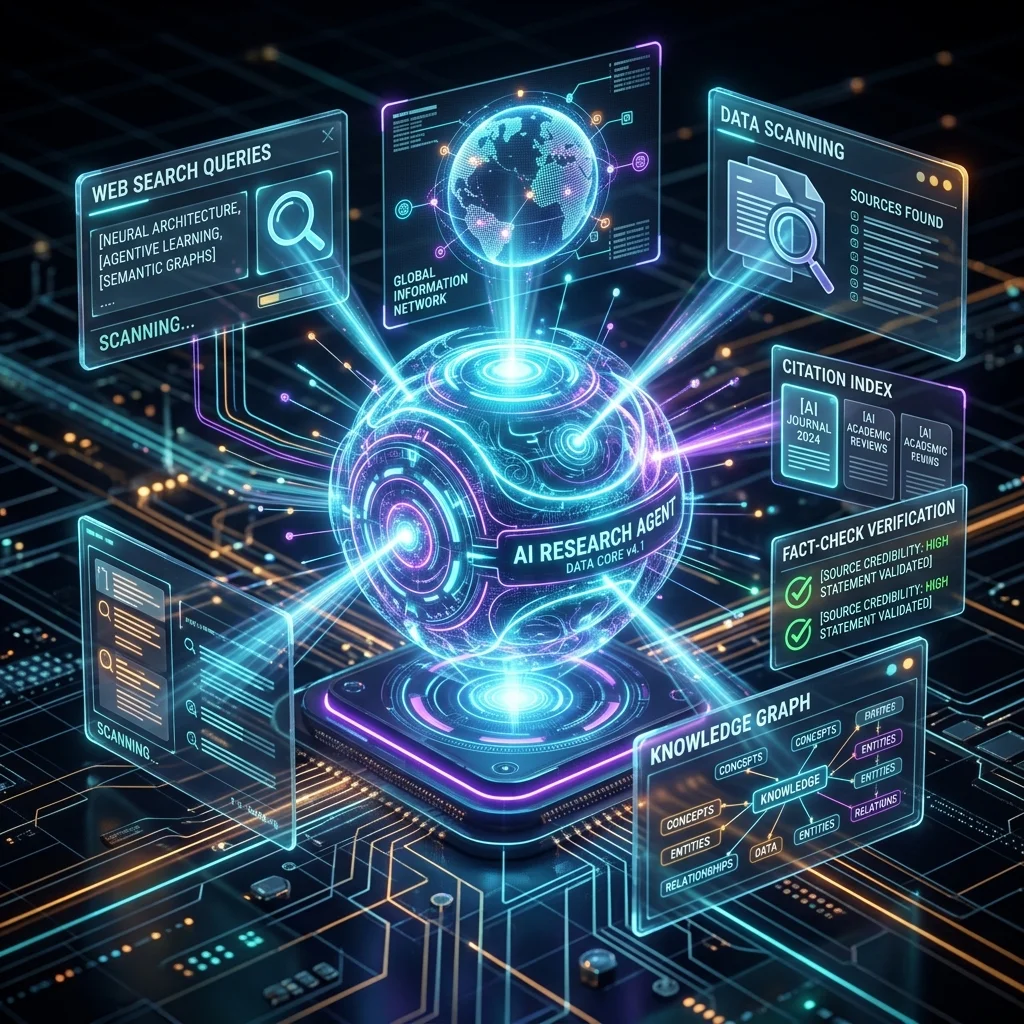
Building Autonomous Research Agents with Firecrawl & Brave Search
Production blueprint for building automated research agents using Firecrawl MCP, Brave Search API, and LLM synthesis with anti-bot resilience.
 #agent-skills
Building Executable Multi-File Agent Skills (Scripts, Assets & Tools)
Move beyond text-only prompts: build advanced Agent Skills bundling deterministic Python/Bash scripts, asset templates, and reference schemas for AI coding agents.
n8n Agentic Workflows: Connecting Webhooks to AI Coding Assistants
Automate GitHub PR triage, incident alerts, and database summaries by orchestrating n8n event-driven pipelines with autonomous coding agents.