World Building Guide for Fiction Writers
Master the art of world building with ChatGPT prompts designed to help you create rich, immersive fictional universes with depth and consistency.
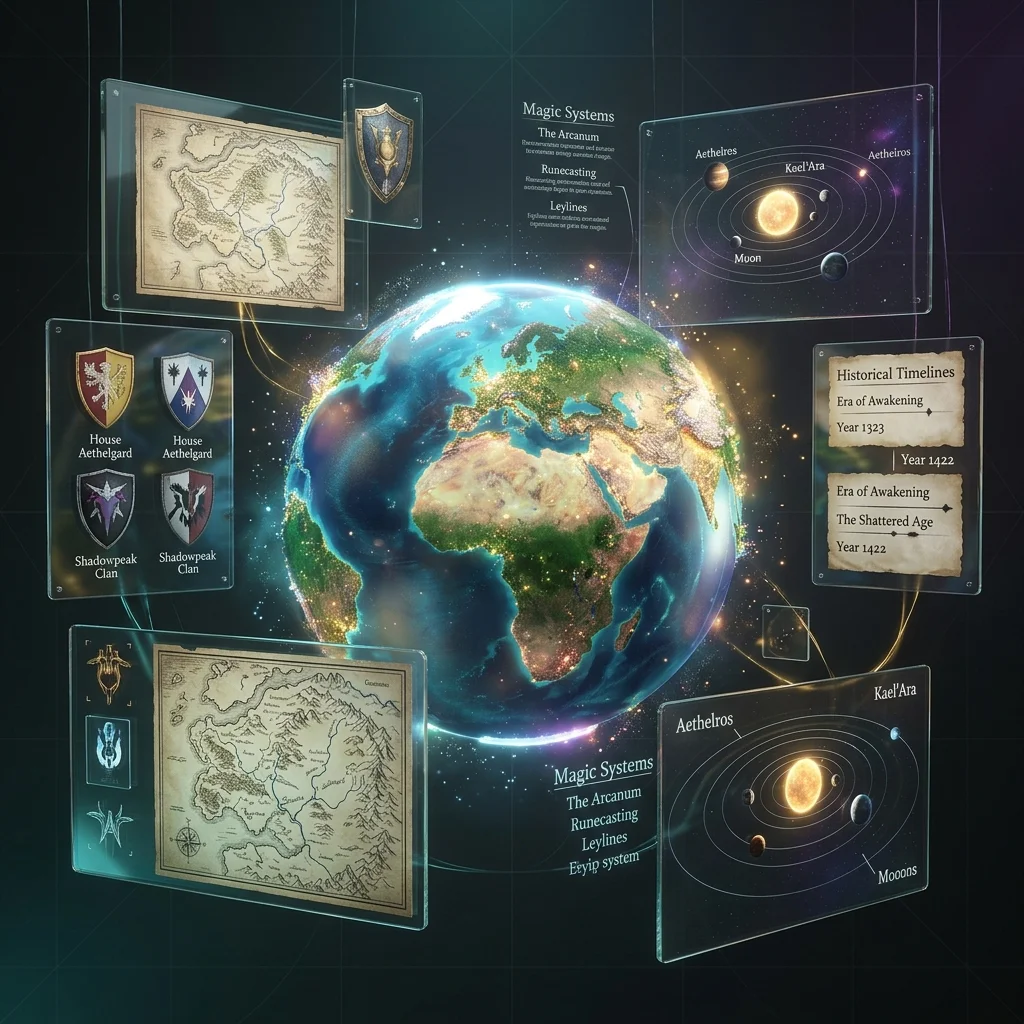
Creating a believable, immersive world is one of the most rewarding aspects of fiction writing. Whether you're crafting a fantasy realm, a sci-fi universe, or an alternate historical setting, strong world building provides the foundation for compelling stories. This guide offers structured ChatGPT prompts to help you develop every aspect of your fictional world, from physical geography to cultural traditions.
World building isn't just about creating maps and timelines—it's about understanding how different elements of your world interact and influence each other. The prompts below will guide you through this process systematically, helping you create a cohesive universe that feels authentic and lived-in.
Physical Environment
Geography and Climate
Help me create the physical environment for my world by describing:
Landscape
- Major landforms (mountains, oceans, forests)
- Notable features (rivers, deserts, islands)
- Key locations

Climate
- General weather patterns
- Seasonal changes
- Unique environmental phenomena

<Note>
Focus on the elements that most impact your story. Not every geographical detail needs to be developed—prioritize features that influence your plot and characters.
</Note>
Architecture and Infrastructure
Help me develop the architectural style and infrastructure for my world:
- Building designs
- City layouts
- Transportation systems
- Technology level
- Resource distribution

Architecture
- Dominant building styles
- Common materials used
- Notable structures

Infrastructure
- City organization
- Transport networks
- Resource management

<Note>
Consider how these elements reflect your world's technology level and culture. Architecture tells a story about available resources, climate, and social values.
</Note>
Cultural Elements
Society Structure
Help me create the social organization for my world by describing:
Power Structure
- Leadership systems
- Social classes
- Key institutions

Economics
- Resource control
- Trade systems
- Wealth distribution

<Note>
Consider how these systems affect daily life in your world. Social structures shape everything from character motivations to conflict sources.
</Note>
Cultural Practices
Help me design the cultural identity of my world by describing:

Daily Life
- Customs and traditions
- Food and festivities
- Social expectations

Beliefs
- Religious practices
- Art and expression
- Cultural values

<Note>
Focus on elements that make your culture distinctive and memorable. Unique cultural practices help differentiate your world from generic fantasy or sci-fi settings.
</Note>
Magic and Technology Systems
Magic System Design
Help me create a magic system for my world:
Core Magic
- Basic principles and rules
- Power sources and limits
- Common abilities

Impact
- Learning and mastery
- Role in society
- Historical evolution

<Note>
Ensure the magic system has clear rules and meaningful consequences. Well-defined limitations make magic more interesting than unlimited power.
</Note>
Technology Framework
Help me develop the technology level for my world:
Current Tech
- Available technologies
- Development level
- Distribution patterns

Impact
- Social effects
- Economic influence
- Future developments

<Note>
Consider how technology shapes everyday life and society's evolution. Technology level affects everything from communication to warfare to social mobility.
</Note>
Historical Context
Timeline Development
Help me create a historical timeline for my world by describing:
Key Events
- Defining moments
- Major conflicts
- Natural disasters

Cultural Evolution
- Social changes
- Technological progress
- Political shifts

<Note>
Focus on events that shaped your world into what it is today. History doesn't need to be exhaustive—highlight the turning points that matter to your story.
</Note>
Mythology and Legends
Help me create the mythological foundation of my world by describing:

Sacred Stories
- Creation myths
- Ancient legends
- Religious beliefs

Cultural Legacy
- Legendary figures
- Folk traditions
- Spiritual practices

<Note>
Consider how these stories shape your world's beliefs and values. Mythology reveals what a culture considers sacred, heroic, or taboo.
</Note>
Bringing It All Together
World building is an iterative process that requires careful consideration of how different elements interact and influence each other. As you develop your world, consider these key principles:
Integration
Every aspect of your world should connect meaningfully with others. Geography influences culture, technology affects social structures, and history shapes beliefs. Look for these natural connections and use them to create a more cohesive world. For example, if your world has limited water resources, this should impact everything from settlement patterns to religious practices to political conflicts.
Consistency
Maintain internal logic across all elements of your world. Each decision should make sense within the established framework, whether it's the limits of your magic system or the development of your technology. Readers will notice inconsistencies, and they can break immersion. If magic requires rare crystals, don't suddenly make them abundant without explanation.
Detail Management
While it's important to develop detailed aspects of your world, focus on elements that directly impact your story. Not every detail needs to be shown, but having this background knowledge will make your world feel more authentic and lived-in. Think of it as an iceberg—readers see the tip, but the depth beneath gives it weight.
Connecting World Building to Your Story
Once you've established your world's foundation, you'll need to populate it with compelling characters and engaging plots. Consider exploring our guides on character creation to develop inhabitants who feel native to your world, and story development to craft narratives that leverage your world's unique features.
For dialogue that reflects your world's culture and social structures, check out our dialogue writing guide.
Final Tips
- Start with the elements most crucial to your story — Don't get lost in details that won't appear in your narrative
- Document your decisions to maintain consistency — Keep a world bible or reference document
- Review and revise as your world grows — World building is iterative, not linear
- Test your world's logic through different scenarios — Ask "what if" questions to find weaknesses
- Remember that your world exists to serve your story — Don't let world building become procrastination
Creating a believable world takes time and iteration. Use these prompts as starting points, adapt them to your needs, and gradually build a rich, immersive universe for your stories. The best worlds feel lived-in because their creators understand not just what exists, but why it exists and how everything connects.
Related Articles & Guides
 #Creative Writing
Creative Writing with ChatGPT: Complete Guide
Master creative writing with ChatGPT. Explore story development, character creation, dialogue writing, world building, and more with expert prompts and techniques.
 #Creative Writing
Character Creation Prompts for ChatGPT
Master character development with ChatGPT prompts. Create compelling, multi-dimensional characters with distinct personalities, backgrounds, and authentic voices.
Dialogue Writing Prompts for Natural Conversations
Master dialogue writing with ChatGPT prompts. Create authentic character voices, dynamic conversations, and compelling subtext for your creative writing.