Midjourney Character Creation: Master AI Prompts for Unique Designs
Master Midjourney character creation with AI prompts. Learn advanced techniques for generating compelling characters across diverse styles and genres, from portraits to fantasy beings, with detailed guides and examples.
Midjourney excels at creating compelling characters across every imaginable style and genre. Whether you're designing realistic portraits, fantastical beings, or futuristic characters, understanding character design principles and prompt structure is essential. This guide teaches you how to craft prompts that bring your character visions to life with consistency and quality.
Master Major Character Categories
Portraits
Full Body Characters
Fantasy & Sci-Fi
Specialized Characters
Essential Character Parameters
Fine-tune your character creations with these key parameters.
Character-Specific Parameters
Note:
When creating characters, layer your descriptions from general to specific: start with character type and role, then add physical features, clothing, pose, and finally mood and atmosphere.
Portraits
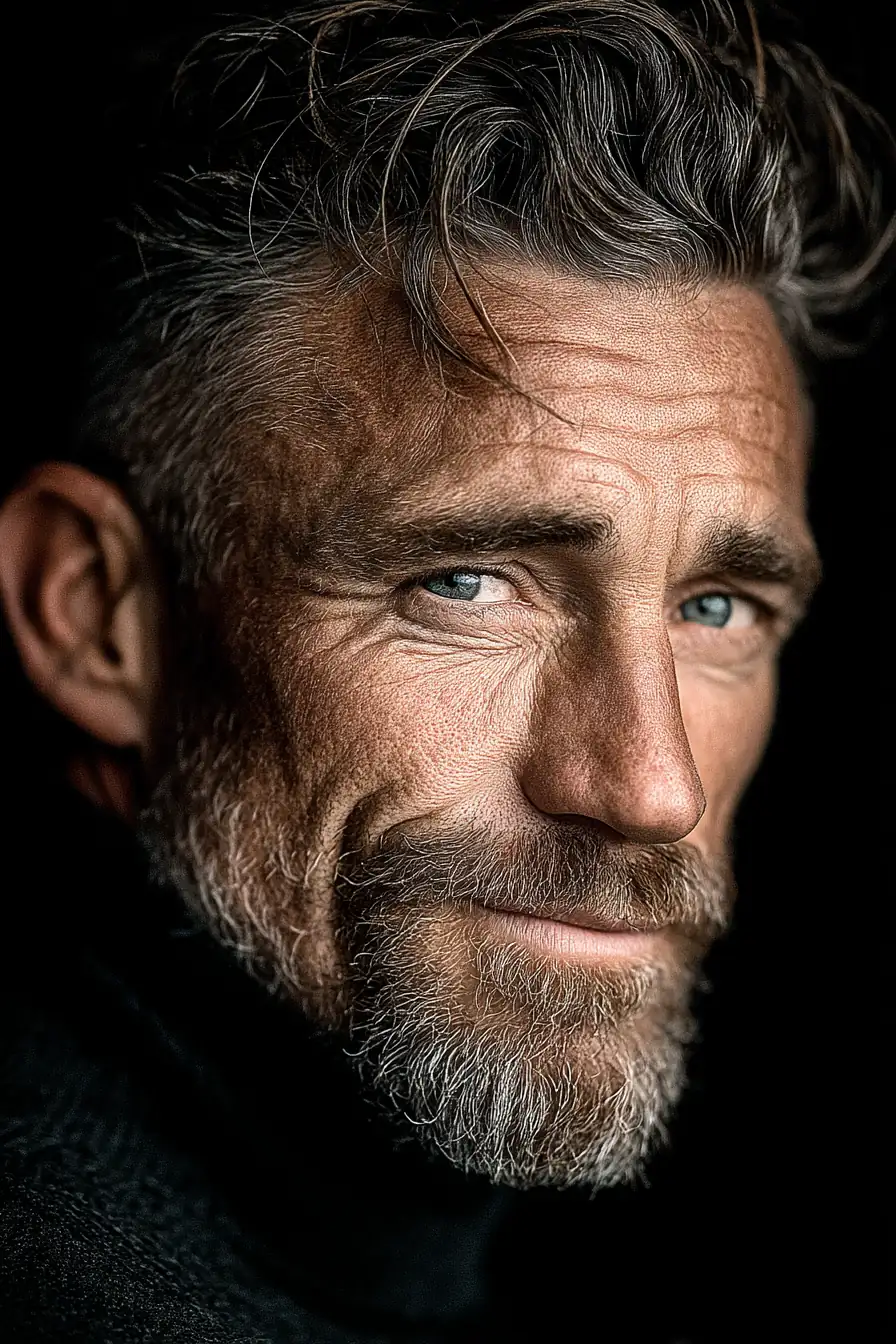
Expressive character portraits with detailed facial features and emotional depth.
Character portrait of middle-aged male: strong jawline with defined features, deep-set blue eyes with confident gaze, salt and pepper hair styled back, weathered skin with character lines, dramatic side lighting creating depth and shadow, oil painting style with visible brushstrokes, warm earth tone palette, contemplative expression --ar 2:3 --stylize 700 --q 2
Fantasy Characters
Magical beings, mythological creatures, and fantastical character designs.
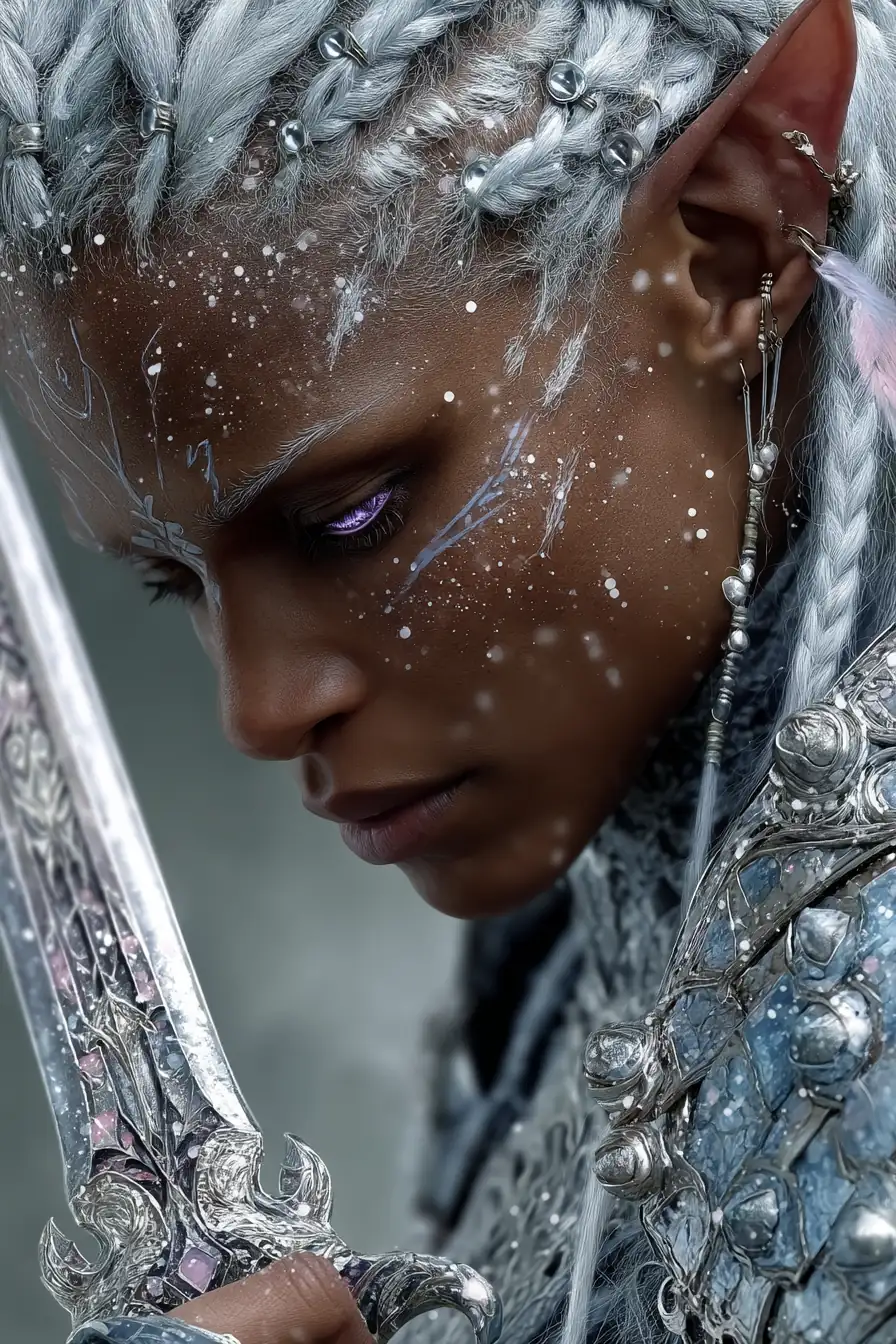
Fantasy elven warrior character: ethereal sharp features with high cheekbones and delicate bone structure, pointed ears with elegant curved tips, luminous violet eyes with magical inner glow, flowing silver hair with intricate braided details and elvish ornaments, porcelain skin with subtle iridescent quality, ornate silver platemail armor with blue gem inlays and elvish engravings, combat stance wielding glowing enchanted longsword, magical aura with particle effects and ethereal mist, dramatic fantasy lighting with rim glow, high fantasy art style --ar 2:3 --stylize 750 --q 2
Explore Fantasy Character Techniques →
Sci-Fi Characters
Futuristic beings, cybernetic characters, and space-age designs.
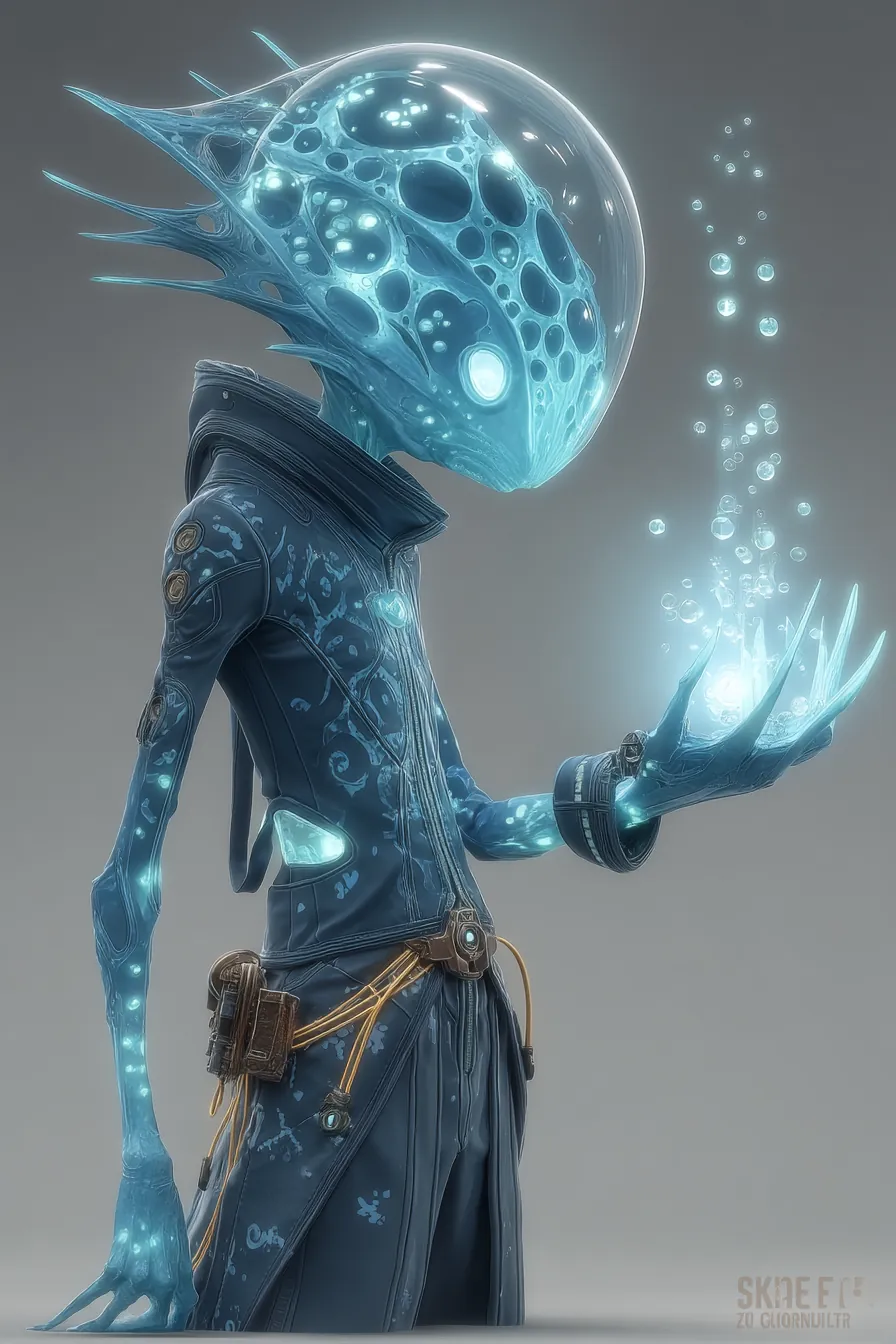
Extraterrestrial explorer character design: bioluminescent crystalline being with translucent skin showing internal light patterns, multiple sensory organs arranged asymmetrically on elongated head, four-fingered hands with delicate crystalline structures, tall slender proportions with graceful alien anatomy, atmospheric adaptation suit with transparent dome helmet and integrated life support, gravity manipulation device worn as belt with floating energy field, holding multi-spectrum scanner with holographic display, standing in alien research station with exotic architecture, analytical intelligent expression, soft bioluminescent glow with scientific lighting --ar 2:3 --stylize 750 --chaos 25 --q 2
Explore Sci-Fi Character Techniques →
Historical Figures
Period-accurate character designs from various historical eras.
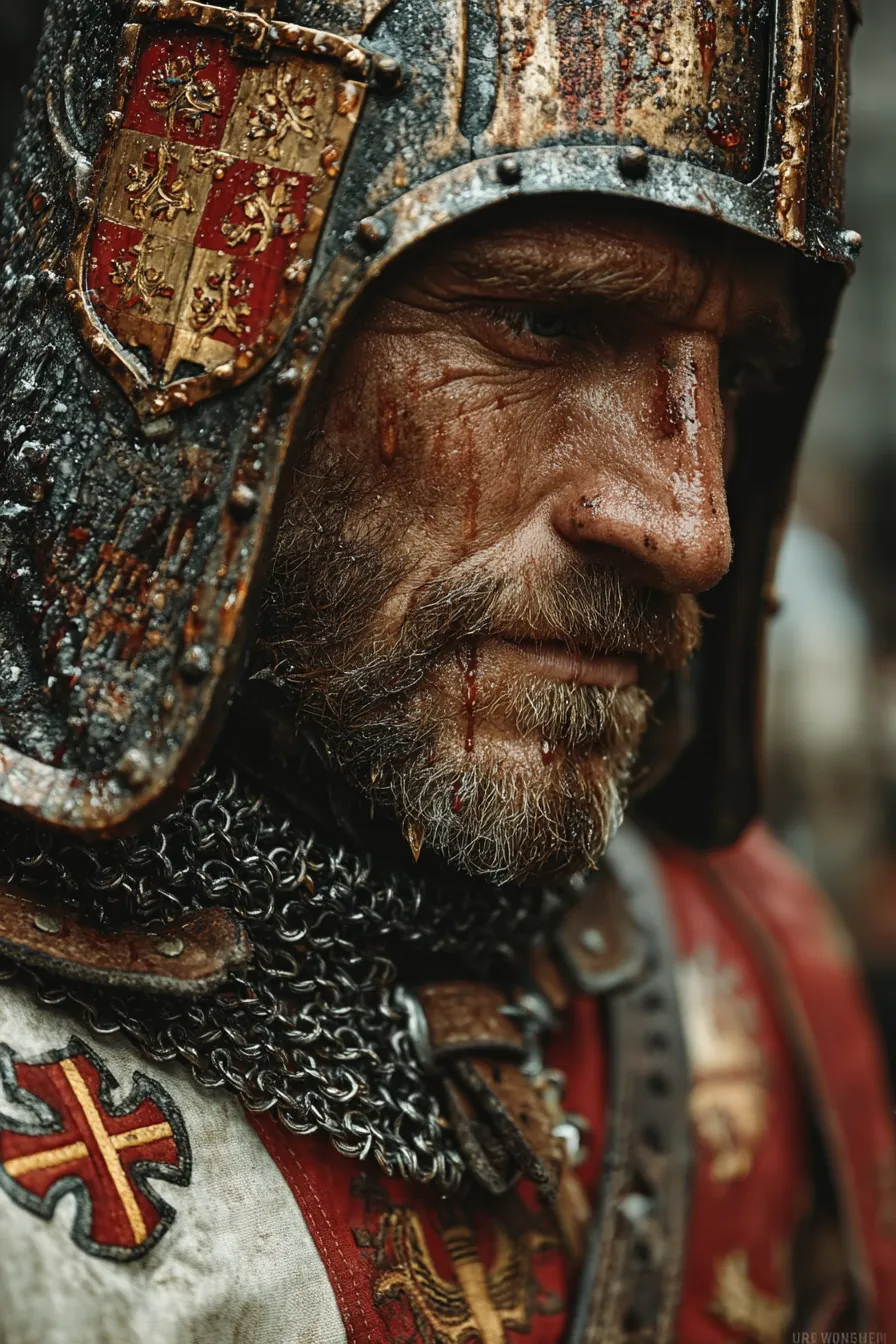
14th century English knight portrait, Hundred Years' War period: battle-hardened face with scars showing years of combat, determined stern expression, chain mail hauberk with coif protecting head and neck, white surcoat displaying heraldic coat of arms in red and gold, leather sword belt with period-accurate buckle, standing in castle courtyard with stone walls, overcast daylight creating even natural lighting, medieval portrait style with attention to armor detail and heraldic accuracy --ar 2:3 --stylize 700 --q 2
Explore Historical Character Techniques →
Anthropomorphic Characters
Animal characters with human characteristics and expressions.
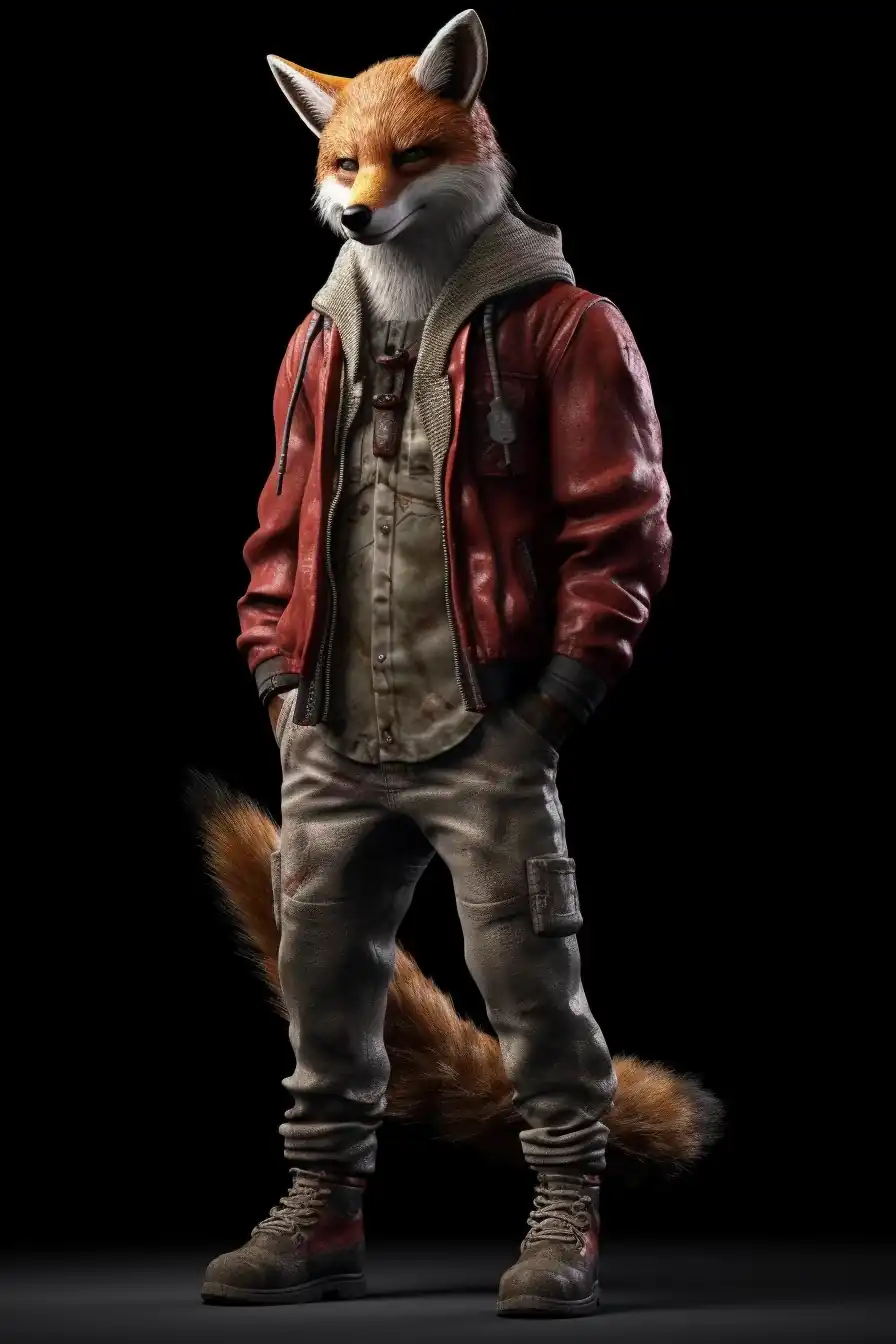
Anthropomorphic fox character: red fox head with expressive features, alert pointed ears with white tips, humanoid body with natural proportions, detailed russet and white fur texture, fluffy fox tail, casual modern clothing with brown leather jacket over graphic tee, relaxed confident stance with hands in pockets, semi-realistic art style with painterly quality, detailed fur rendering with individual hair strands, soft natural lighting with warm tones --ar 2:3 --stylize 700 --q 2
Prompt Structure Best Practices
Note:
When crafting character prompts, build from general to specific: character type → physical attributes → clothing and accessories → pose and expression → artistic style and lighting.
- Three-Layer Approach:
[Character Type] character:
[Physical Features] with [Distinctive Traits]
[Clothing and Accessories], [Pose and Expression]
[Art Style], [Lighting and Mood]
--ar [ratio] --stylize [700-800] --q 2
-
Include Essential Details:
- Physical attributes (age, build, facial features, hair, eyes)
- Clothing and accessories (style, materials, details)
- Pose and body language (stance, gesture, action)
- Expression and emotion (facial expression, mood, personality)
- Artistic style (realistic, painterly, stylized, period-specific)
- Lighting setup (dramatic, natural, atmospheric, directional)
-
Character Consistency Template:
[Character Type] character design:
- Features: [detailed physical description]
- Outfit: [clothing and accessories]
- Pose: [body language and stance]
- Expression: [emotion and personality]
- Style: [art style and rendering]
- Lighting: [lighting setup and mood]
--ar 2:3 --stylize 700 --q 2
Pro Tip:
The --stylize 700-800 range works best for character creation. Higher values (800+) emphasize artistic interpretation, while lower values (500-700) maintain better anatomical accuracy and detail.
Common Pitfalls to Avoid
- Vague Descriptions: Avoid "cool character" or "interesting person." Be specific about features, clothing, and style.
- Contradictory Elements: Don't mix incompatible styles (e.g., "photorealistic anime character").
- Missing Key Details: Always specify age range, build, facial features, and clothing style.
- Overcrowded Prompts: Too many details can confuse the AI. Focus on 3-5 key distinctive features.
- Poor Parameter Selection: Use appropriate aspect ratios (2:3 for portraits, 3:4 for full body).
Tips for Mastering Character Creation
- Study Anatomy and Proportions: Understand basic human anatomy to describe characters accurately
- Experiment with Stylize Values: Test --s 500, 650, 750, 850 to find your preferred character style
- Combine Character Types: Blend elements (e.g., "Victorian steampunk explorer") for unique designs
- Iterate on Details: Start simple, then refine specific features in subsequent generations
- Build a Prompt Library: Save successful character prompts for future reference and consistency
- Use Reference Images: Study professional character art to understand effective visual elements
Note:
Character portraits benefit from higher quality settings (--q 2) to properly render facial features, skin texture, and fine details. Don't skip quality parameters for detailed character work.
Character Creation Workflow
-
Concept Phase:
- Define character role and personality
- Determine key visual traits
- Choose artistic style and mood
- Plan distinctive features
-
Initial Generation:
- Start with basic character template
- Include essential physical features
- Specify clothing and pose
- Set appropriate parameters
-
Refinement:
- Adjust specific facial features
- Fine-tune clothing details
- Modify pose and expression
- Experiment with lighting
-
Consistency:
- Document successful prompts
- Save parameter settings
- Create character sheets with multiple angles
- Build variation library
Back to Midjourney Prompting Guide →
Related Articles & Guides
 #Prompt Engineering
Editorial Poster & Infographic Prompting
Master the Art Director Framework to generate commercial-grade editorial posters, photo-to-infographic analysis cards, and structured knowledge diagrams across GPT-Image-2, FLUX, and Midjourney.
 #Midjourney
Midjourney Style Reference (SREF) Guide: Codes & Examples
Master Midjourney's SREF feature to apply consistent artistic styles. Learn parameters, best practices, and discover curated style collections for your art.
#MidjourneyMastering Character Portraits in Midjourney: Techniques, Styles, and Prompts
Create stunning character portraits with Midjourney using advanced prompts, lighting techniques, and artistic parameters. Explore photorealistic, artistic, fantasy, and vintage portrait styles.