Midjourney Historical Figures: Period-Accurate Portraits
Create authentic Egyptian pharaohs, medieval knights, and Renaissance nobles with Midjourney. Period-specific prompts with accurate details, clothing, and settings.
Introduction
Creating historical figures in Midjourney requires understanding of period-accurate details, cultural context, and portrait techniques. This guide helps you craft effective prompts for generating authentic historical character images that capture the essence of different eras. Whether you're creating characters for historical fiction, educational materials, or artistic exploration, these techniques will help you achieve more accurate and compelling historical portraits.
Explore our complete character creation guide and portrait techniques to master visual storytelling with Midjourney.
Core Historical Period Categories
Ancient Civilizations
Medieval Period
Renaissance & Early Modern
Modern Era
Key Parameters for Historical Figures
Fine-tune your historical character creations with these essential parameters.
Historical-Specific Parameters
Note:
The most authentic historical figures balance period accuracy with artistic quality. Research specific eras thoroughly and include cultural details that define the time period.
Detailed Style Examples
Note:
This section showcases key historical periods with practical examples. Each example demonstrates specific techniques and parameter settings for period-accurate historical figures.
Prompt Templates
Basic Historical Figure
[historical era] [figure type], [period details]:
- Attire: [period clothing]
- Features: [physical traits]
- Accessories: [historical items]
- Style: [artistic approach]
--ar 2:3 --v 5
Example:
18th century French noblewoman, elegant and refined:
- Attire: Silk gown with panniers, lace fichu, powdered wig
- Features: Graceful posture, delicate features, beauty mark
- Accessories: Pearl necklace, fan, small dog
- Style: Rococo portrait, soft lighting
--ar 2:3 --v 5 --q 2
Detailed Historical Portrait
[specific era] historical figure portrait:
- Period: [historical context]
- Clothing: [detailed period attire]
- Features: [authentic details]
- Setting: [historical environment]
- Lighting: [period-appropriate]
--ar 2:3 --v 5 --q 2
Example:
Ancient Egyptian pharaoh portrait:
- Period: New Kingdom, 18th Dynasty
- Clothing: Shendyt kilt, nemes headdress, broad collar
- Features: Strong profile, kohl-lined eyes, ceremonial beard
- Setting: Palace throne room with hieroglyphs
- Lighting: Dramatic side lighting, golden hour
--ar 2:3 --v 5 --q 2 --s 750
Victorian Gentleman
Period-accurate Victorian era portrait with authentic styling and atmosphere.
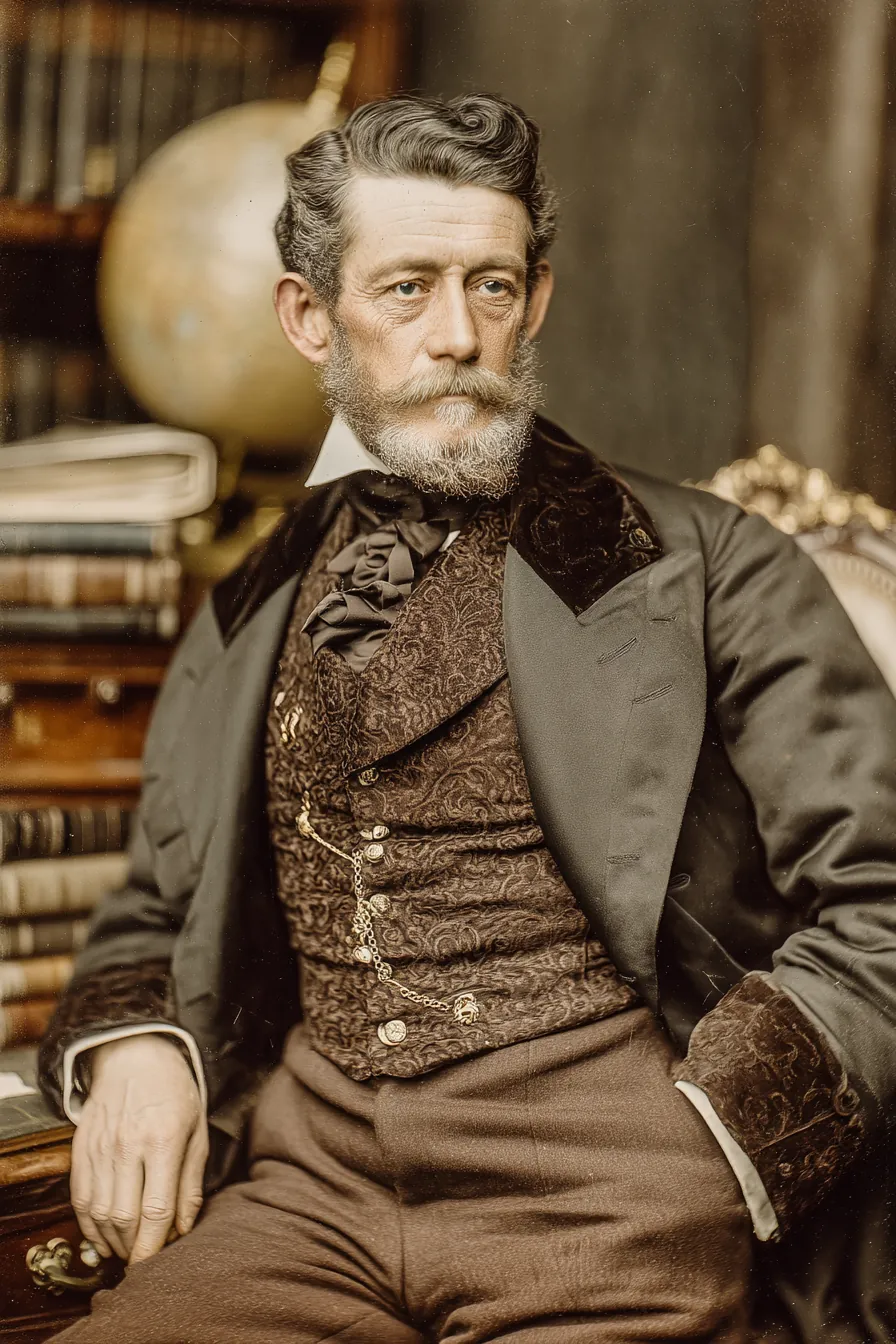
Victorian era gentleman portrait, 1860s Britain: distinguished middle-aged man with well-groomed sideburns and neat appearance, tailored dark frock coat with velvet collar, embroidered waistcoat with pocket watch chain, crisp white shirt with high collar and silk cravat, seated at mahogany desk in personal study, surrounded by leather-bound books and brass globe, warm gaslight illumination creating soft shadows, sepia-toned color palette with rich browns and warm highlights, period-accurate portrait style --ar 2:3 --stylize 700 --q 2
Key Techniques:
- Include period-specific clothing details (frock coat, waistcoat, cravat)
- Reference era-appropriate grooming (sideburns, neat appearance)
- Add period-accurate environmental elements (gaslight, mahogany, leather books)
- Use period lighting (gas lamp, warm tones)
- Apply
--stylize 700for artistic period portrait quality
Renaissance Noble
Classical Renaissance portrait with period-accurate styling and artistic technique.
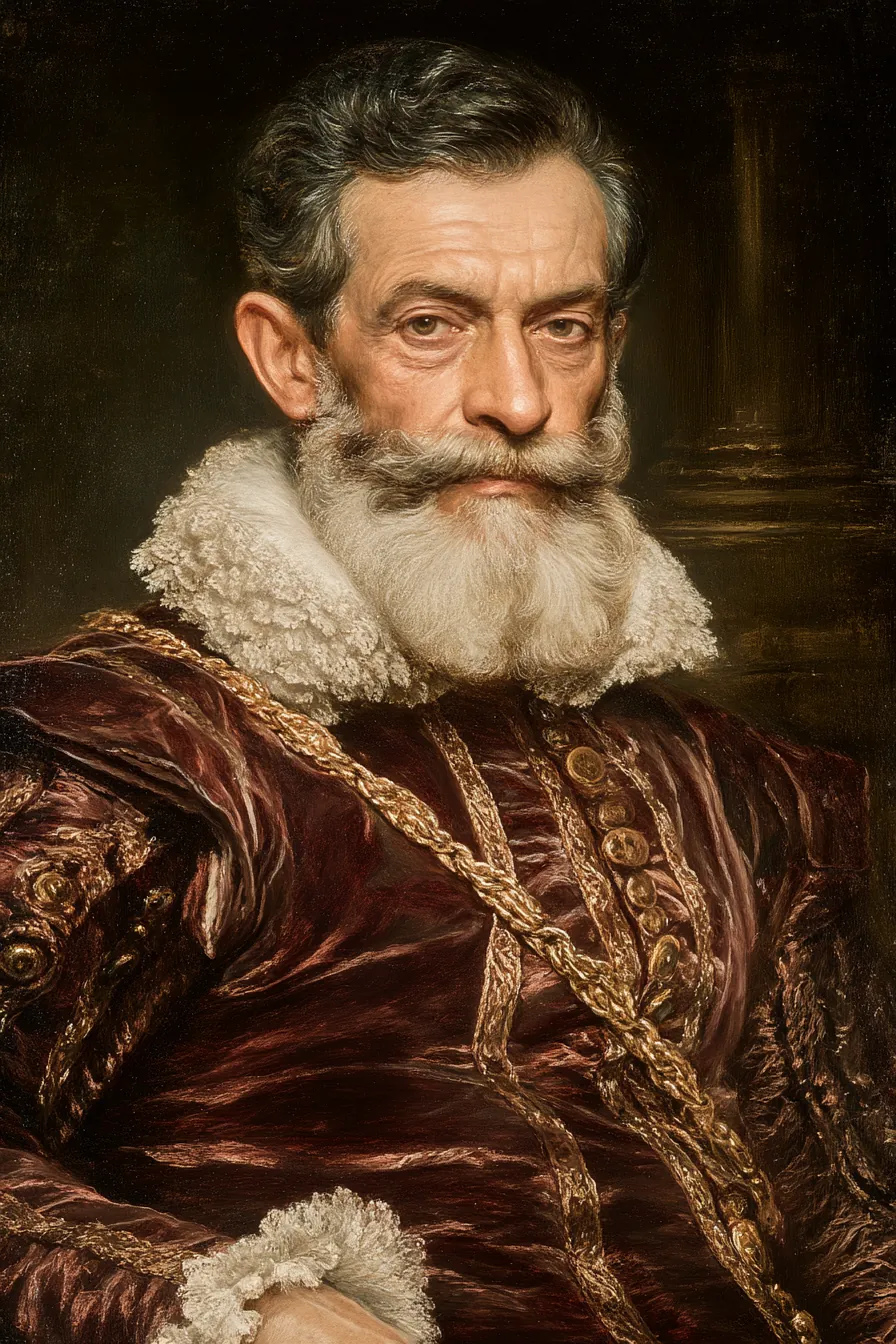
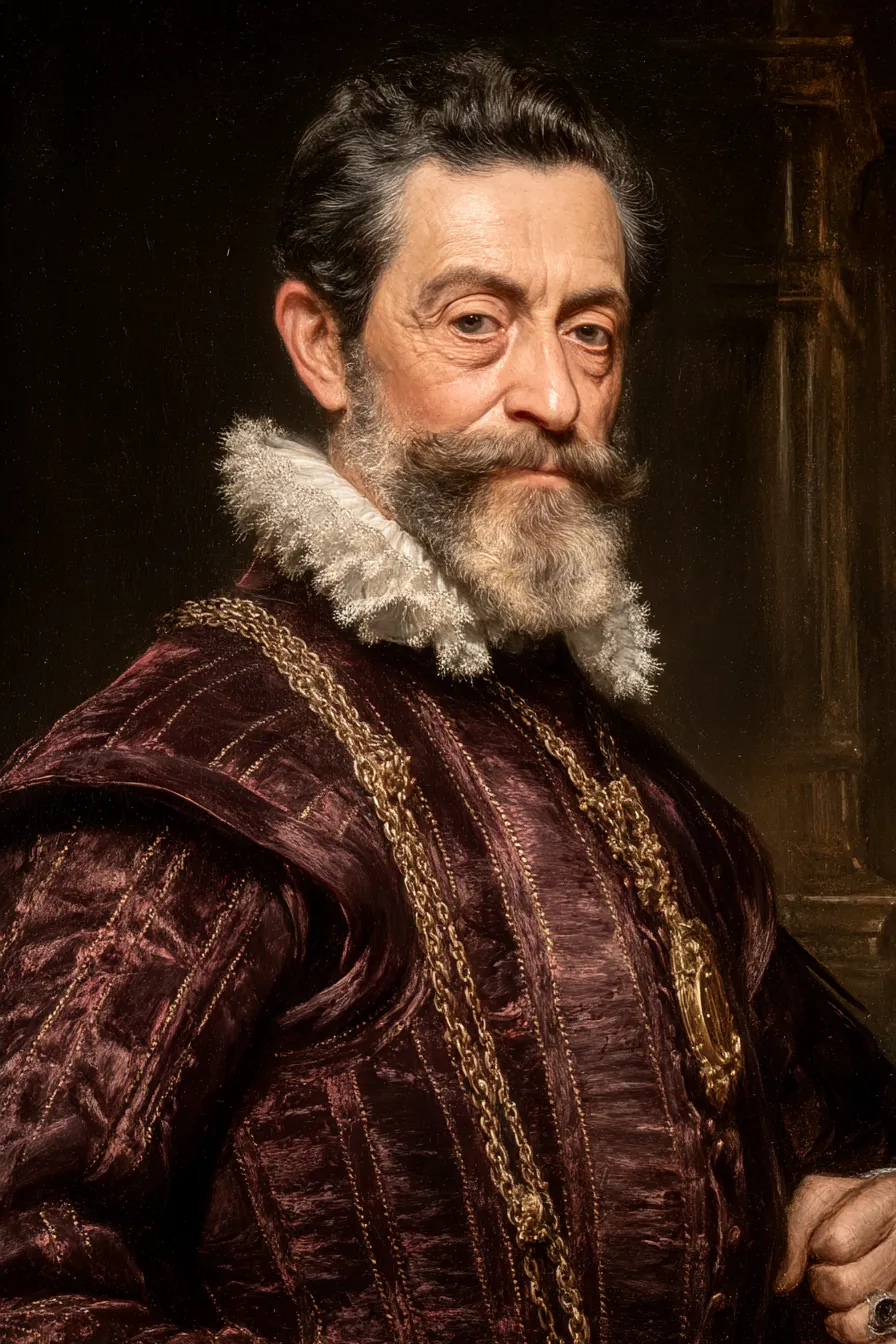
16th century Italian Renaissance nobleman portrait: aristocratic features with trimmed beard and noble bearing, rich burgundy velvet doublet with slashed sleeves showing white silk lining, ornate white ruff collar with precise pleating, heavy gold chain of office across shoulders, family signet ring on hand, three-quarter view pose showing dignity and status, dark background with subtle architectural elements, Rembrandt lighting technique with dramatic chiaroscuro, oil painting style with rich colors and fine details --ar 2:3 --stylize 750 --q 2
Key Techniques:
- Reference specific Renaissance clothing (doublet, ruff collar, slashed sleeves)
- Include status symbols (gold chain, signet ring)
- Use classical portrait lighting (Rembrandt, chiaroscuro)
- Specify oil painting style for period authenticity
- Apply
--stylize 750for artistic Renaissance aesthetic
Medieval Knight
Authentic medieval warrior portrait with period-accurate armor and setting.
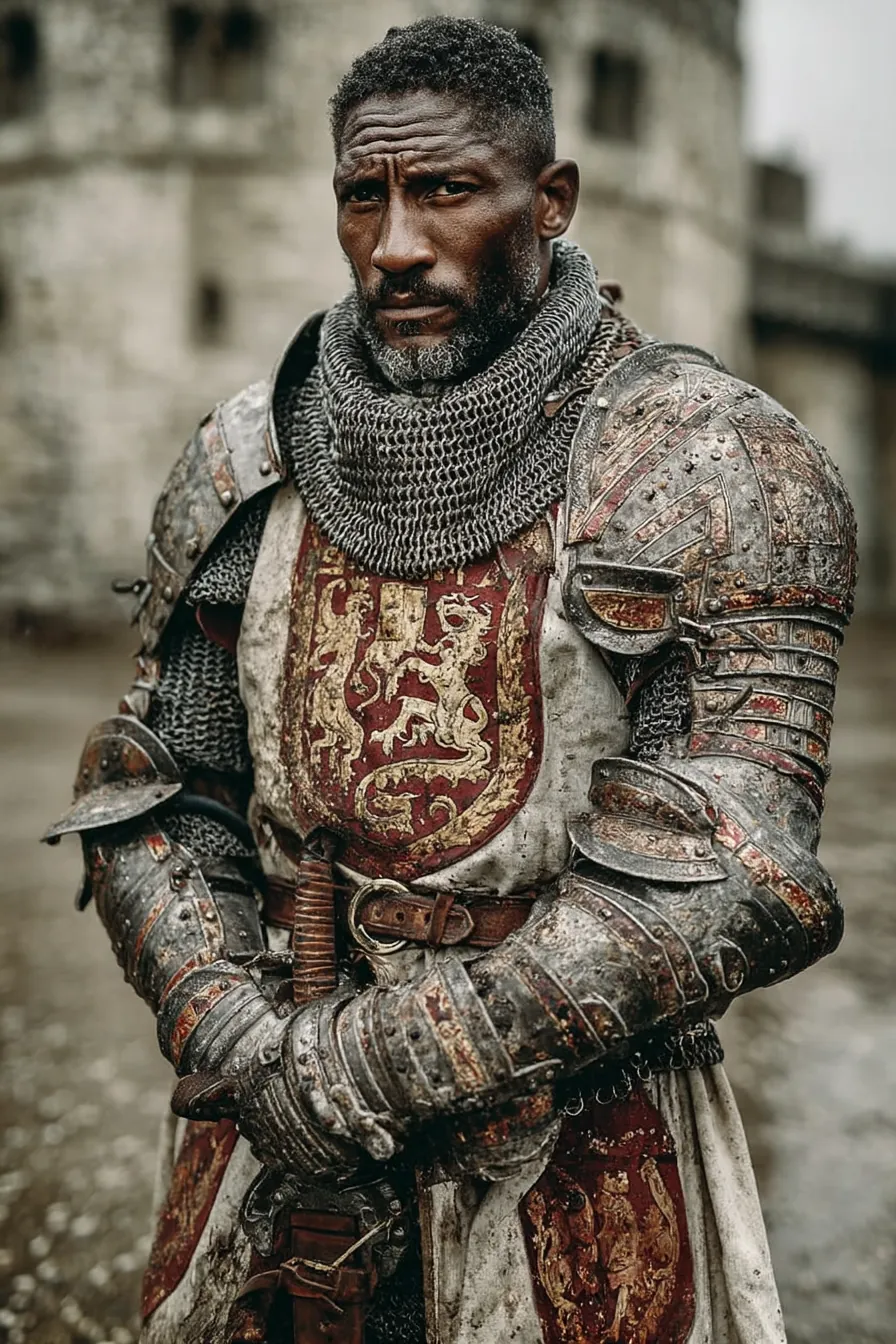
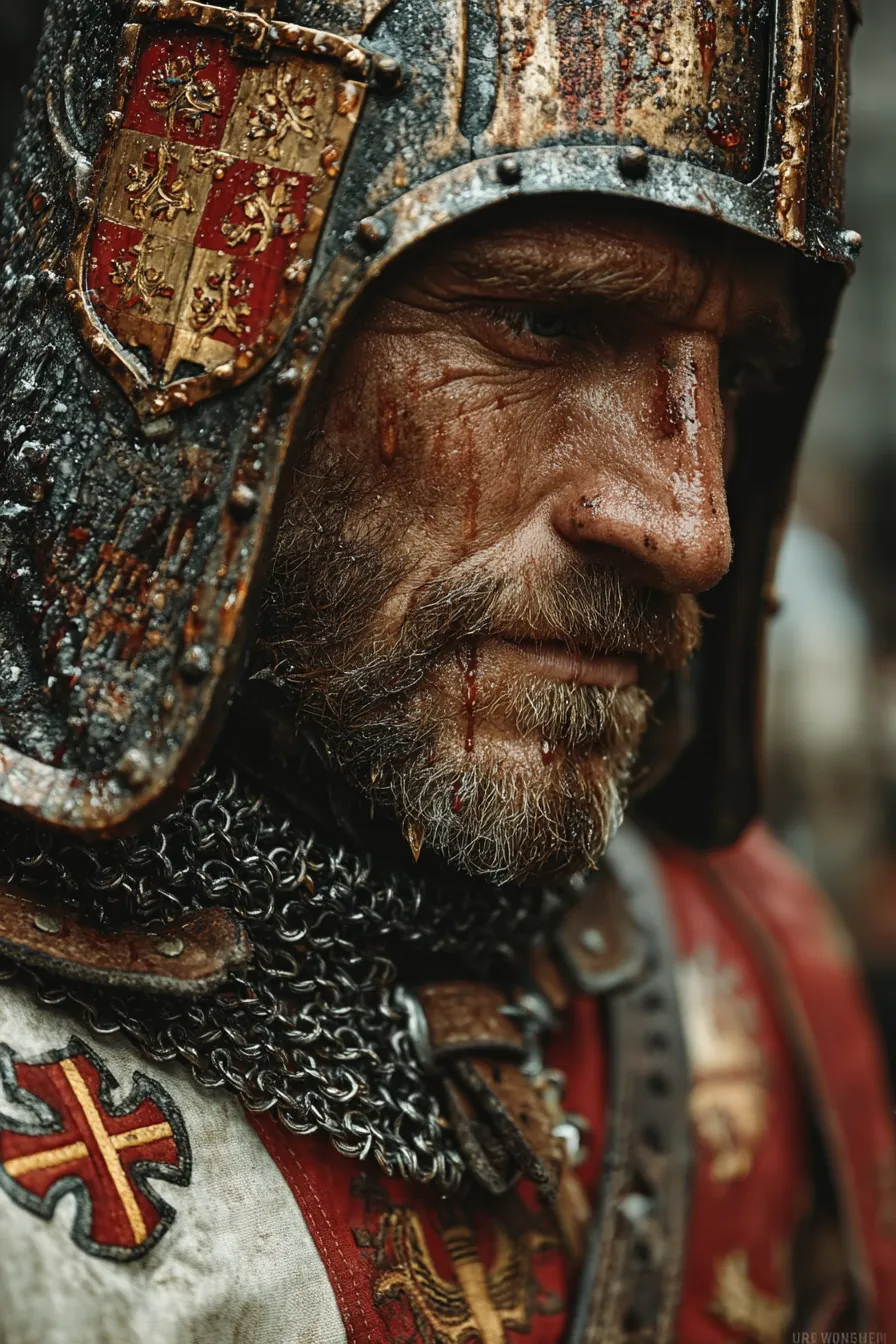
14th century English knight portrait, Hundred Years' War period: battle-hardened face with scars showing years of combat, determined stern expression, chain mail hauberk with coif protecting head and neck, white surcoat displaying heraldic coat of arms in red and gold, leather sword belt with period-accurate buckle, standing in castle courtyard with stone walls, overcast daylight creating even natural lighting, medieval portrait style with attention to armor detail and heraldic accuracy --ar 2:3 --stylize 700 --q 2
Key Techniques:
- Include period-accurate armor (chain mail, surcoat)
- Add heraldic elements (coat of arms, period colors)
- Reference battle experience (scars, weathered features)
- Use medieval setting (castle, stone architecture)
- Apply natural period lighting (overcast daylight)
Ancient Egyptian Pharaoh
Authentic ancient Egyptian royal portrait with cultural accuracy.
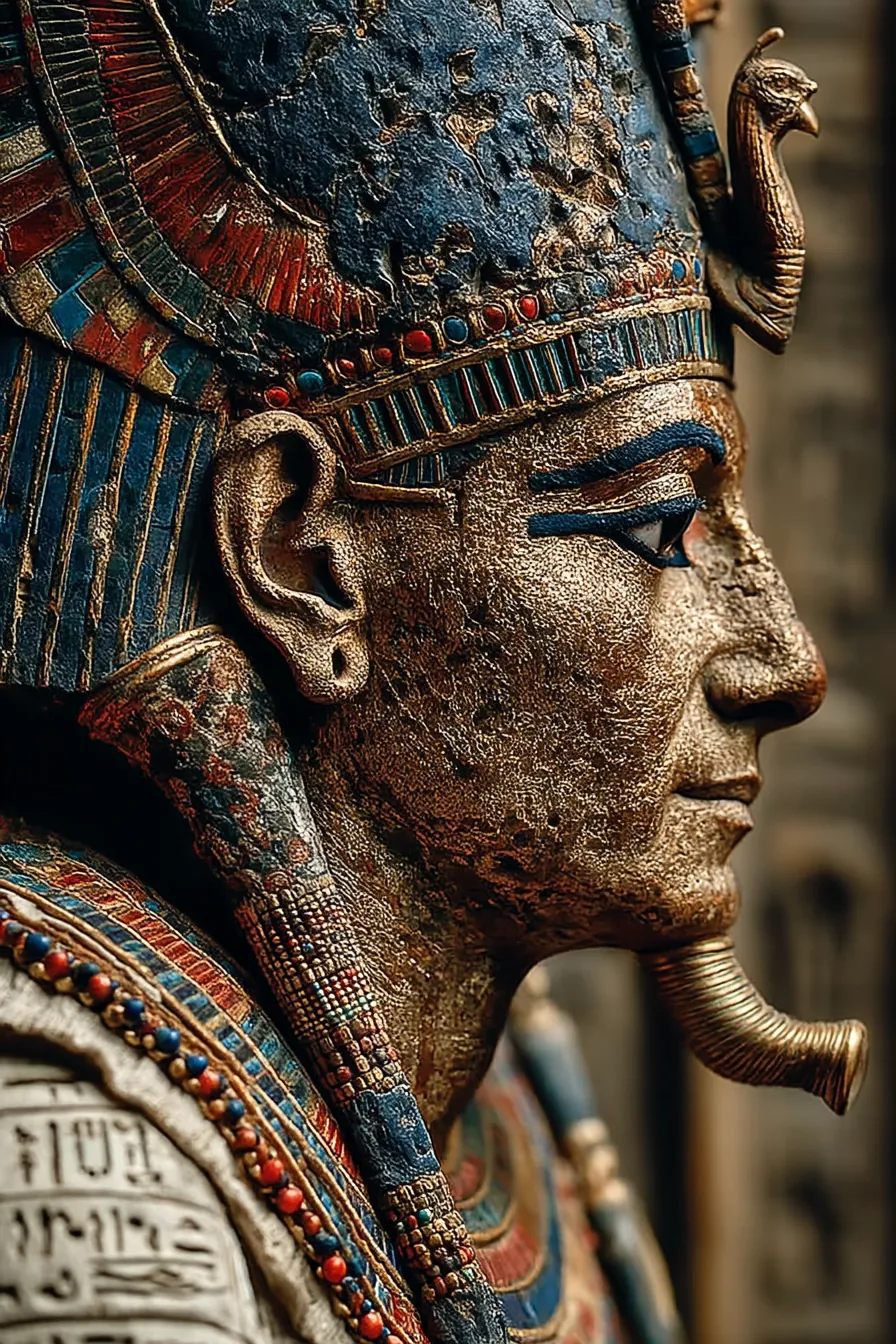
Ancient Egyptian pharaoh portrait, New Kingdom 18th Dynasty: strong regal face with natural bronze skin tone and realistic texture, kohl-lined eyes with dramatic black eyeliner, ceremonial false beard attached with golden straps, striped nemes headdress in blue and gold with uraeus cobra symbol, broad collar necklace with colorful beads and gold, white shendyt kilt with pleated linen, seated on throne in palace chamber with hieroglyphic inscriptions on walls, dramatic side lighting creating golden hour glow, cinematic realistic oil painting style with rich detail and authentic historical accuracy --ar 2:3 --stylize 750 --q 2
Key Techniques:
- Follow Egyptian artistic conventions (profile view, symbolic elements)
- Include authentic regalia (nemes, uraeus, broad collar, false beard)
- Add cultural details (hieroglyphs, palace setting)
- Use period-appropriate colors (gold, blue, white)
- Reference specific dynasty for accuracy
Advanced Techniques
Period-Accurate Details
Creating authentic historical figures requires attention to the smallest details that define a particular era. The key is to understand the cultural and technological context of the time period you're representing. This approach parallels the techniques used in creating fantasy characters, where world-building details are equally essential.
Clothing and Fashion are perhaps the most immediately recognizable indicators of historical period. Research the specific styles, fabrics, and construction methods used during your chosen era. Pay attention to how clothing indicated social status—nobles, clergy, and commoners would have distinct attire. Consider seasonal variations and regional differences within the same time period.
Hairstyles and Grooming practices varied significantly across historical periods and cultures. Research how people wore their hair, what facial hair was fashionable, and what grooming practices were common. For example, powdered wigs were fashionable in 18th century Europe but would be completely out of place in ancient Egypt.
Accessories and Props help ground your character in their historical context. Consider what objects would be appropriate for your character's social status and occupation. A medieval knight might have a sword and shield, while a Renaissance merchant might have ledgers and coins. Pay attention to the materials these objects would be made from—metalworking techniques, for example, evolved significantly over time.
Environmental Context helps establish the historical setting. Consider the architecture, furniture, and decorative elements that would be present in your character's environment. Research the lighting sources available during that period—candlelight, oil lamps, or gas lighting would create different atmospheric effects.
Historical Accuracy
Maintaining historical accuracy is essential for creating authentic historical figures. This requires careful research and attention to detail to avoid anachronisms and ensure your character fits within their historical context.
A robust Research Process is your best tool for accuracy. Study period art, portraits, and sculptures to understand how people were represented during that time. Consult historical texts and academic resources to verify details about clothing, accessories, and cultural practices. Look for primary sources when possible—diaries, letters, and contemporary accounts can provide valuable insights.
Cultural Sensitivity is important when representing historical figures from cultures different from your own. Avoid stereotypes and caricatures. Research the cultural significance of certain symbols, colors, and designs to ensure you're representing them respectfully and accurately. Consider consulting with experts or members of the culture you're representing for guidance.
Balancing Accuracy with Aesthetics can be challenging. While historical accuracy is important, you also want your character to be visually appealing and compelling. Consider which historical details are essential for authenticity and which can be slightly modified for artistic purposes. Be transparent about any artistic liberties you take.
Historical-Specific Parameters
-
Aspect Ratio Selection
- 2:3 for portrait-style historical figures
- 3:4 for full body historical scenes
- 16:9 for environmental historical settings
- 1:1 for detail shots of historical artifacts
-
Style Parameters
- --v 5 for consistent historical style
- --s 750 for detailed period elements
- --q 2 for high-quality rendering
- --c 0 for predictable results
-
Period-Specific Keywords
- Add "period-accurate," "historically accurate" for authenticity
- Include era-specific terms (e.g., "medieval," "renaissance," "victorian")
- Use artistic style references (e.g., "in the style of Rembrandt," "like a Roman bust")
- Add material descriptors (e.g., "oil painting," "marble sculpture," "daguerreotype")
For cinematic historical settings, review period-drama cinematography techniques to enhance your prompts with authentic visual styling.
Common Mistakes
-
Historical Accuracy
- Anachronistic elements (modern features in historical settings)
- Incorrect period details (wrong clothing styles, accessories)
- Mixed era features (combining elements from different periods)
- Inaccurate styling (modern artistic approaches to historical subjects)
- Oversimplified representations (missing nuanced details)
-
Technical Issues
- Poor period lighting (modern lighting in historical scenes)
- Incorrect portrait style (not matching period artistic conventions)
- Unclear historical context (ambiguous time period)
- Inconsistent quality (poor rendering of period details)
- Wrong aspect ratios (poor framing for historical portraits)
-
Cultural Representation
- Stereotypical depictions (relying on clichés)
- Lack of cultural elements (missing important cultural markers)
- Inaccurate social status indicators (confusing class distinctions)
- Poor integration with environment (character doesn't fit setting)
- Insensitive representation (disrespectful portrayal)
Tips for Success
-
Research
- Study period art and portraits
- Verify historical details
- Check multiple references
- Understand cultural context
- Consult historical experts when possible
-
Execution
- Match period artistic style
- Use historically accurate terms
- Balance detail and simplicity
- Maintain authenticity
- Consider social status and occupation
-
Historical Enhancement
- Research specific time periods
- Study period artistic techniques
- Create character backstories
- Develop historical environments
- Build a reference library
Historical Figure Workflow
-
Research Phase
- Define historical period and region
- Research clothing and fashion
- Study period art and portraits
- Identify cultural markers
- Gather reference materials
-
Concept Development
- Define character role and status
- Plan period-accurate details
- Design historical environment
- Create character backstory
- Plan visual style
-
Prompt Creation
- Start with basic template
- Add period-specific details
- Include cultural elements
- Specify artistic style
- Set appropriate parameters
-
Refinement Process
- Generate multiple variations
- Identify anachronisms
- Adjust historical details
- Test different poses
- Refine until satisfied
Conclusion
Mastering historical figure creation in Midjourney requires deep understanding of historical periods, artistic styles, and technical parameters. Use these templates as a foundation and research specific periods for authentic results. Remember that the most compelling historical figures have a clear sense of time and place, with details that accurately reflect their historical context. With careful research and attention to detail, you can create historical characters that transport viewers to different eras and bring history to life.
For more advanced prompting techniques, explore the complete Midjourney prompting guide and experiment with different artistic styles to enhance your historical figure creations.
Related Articles & Guides
Midjourney Cheat Sheet 2026
All Midjourney parameters, aspect ratios, SREF codes, and settings in one reference. Updated for Midjourney v6 and v7.
 #midjourney
Modern Digital Anime SREF Codes for Midjourney
Master modern digital anime SREF codes for Midjourney. Create contemporary animation styles with smooth digital rendering, modern color techniques, and current production aesthetics.
 #midjourney
Manga & Comic Style SREF Codes for Midjourney
Discover manga and comic book SREF codes for Midjourney. Create authentic manga aesthetics with bold lines, panel layouts, screen tones, and sequential art styling.