Midjourney Weapon Design: Master Prompts for Swords, Guns & More
Master Midjourney weapon design and creation. Learn to craft stunning swords, futuristic guns, and fantasy armaments with advanced prompting techniques and detailed examples.
Introduction
Creating detailed weapons in Midjourney requires understanding weapon design, historical accuracy, and visual aesthetics. This guide covers essential techniques for generating various weapon types, from ancient swords to futuristic firearms. For related content, explore Midjourney vehicles or Midjourney character design.
Basic Elements
A well-structured weapon prompt includes:
Weapon Type
- Melee weapons (swords, axes, maces, polearms)
- Ranged weapons (bows, crossbows, firearms)
- Fantasy weapons (magical staves, enchanted blades)
- Futuristic weapons (energy rifles, plasma blades)
Design Elements
- Material properties (steel, mythril, carbon fiber)
- Surface details (engravings, runes, patterns)
- Mechanical features (triggers, mechanisms, hinges)
- Special effects (glowing, energy trails, magical auras)
Technical Parameters
- View angle (side profile, 3/4 view, close-up)
- Background style (dark studio, battlefield, display case)
- Rendering style (photorealistic, concept art, stylized)
- Detail level (high, medium, schematic)
Note:
The most compelling weapon designs balance visual appeal with functional believability. Consider how the weapon would be wielded and its practical purpose.
Prompt Templates
Basic Weapon Design
[weapon type] design, [style], [era]:
- Materials: [material details]
- Features: [special elements]
- Finish: [surface treatment]
- Lighting: [light setup]
--ar 16:9 --v 5
Detailed Weapon Concept
[specific weapon] concept art:
- Type: [weapon category and style]
- Materials: [construction materials]
- Details: [engravings, decorations]
- Effects: [magical or tech effects]
- Setting: [display environment]
--ar 16:9 --v 5 --q 2
Style Examples
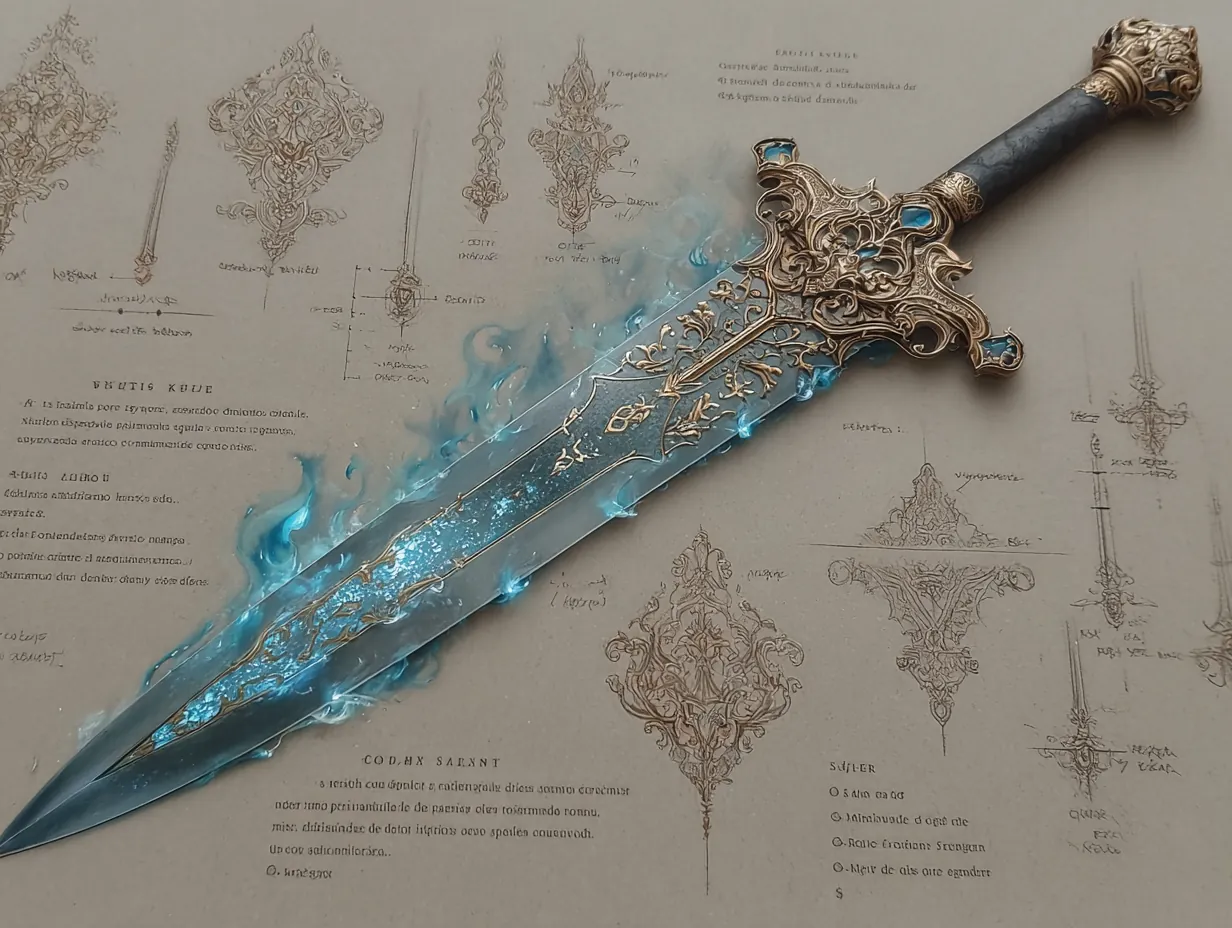
Fantasy Sword
Enchanted longsword concept art: - Mythril blade with glowing blue runes --ar 16:9 --v 5 --s 750
Key Elements
- Mythril blade with glowing blue runes
- Ornate dragon-themed crossguard
- Leather-wrapped grip with gemstone pommel
- Ethereal magical aura emanating from blade
- Dark studio lighting with rim light
Sci-Fi Energy Rifle
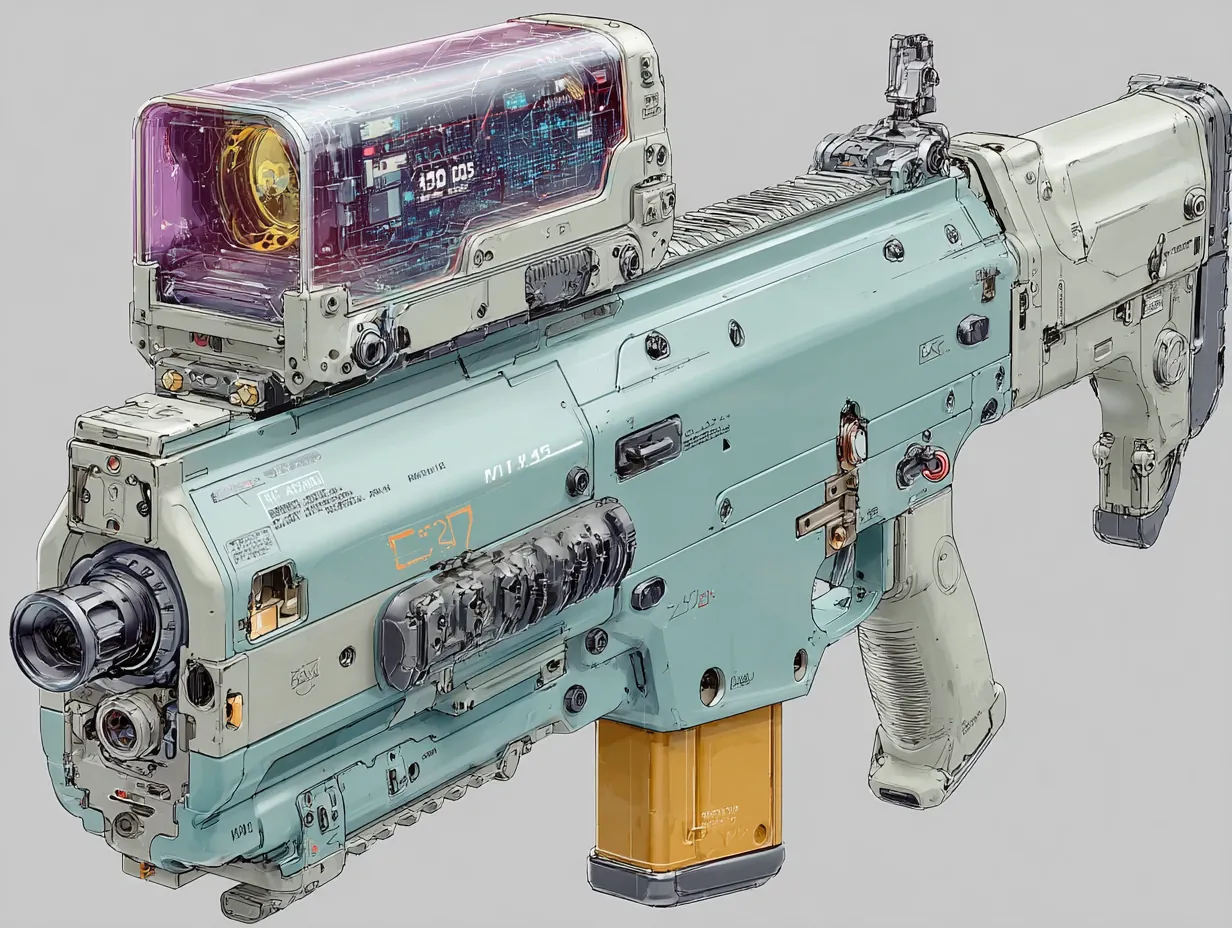
Futuristic plasma rifle concept: - Glowing cyan energy core visible through casing - Holographic targeting display - Modular attachment rails - Tech lab environment with ambient lighting --ar 16:9 --v 5 --q 2
Key Elements
- Sleek nano-alloy construction
- Glowing cyan energy core visible through casing
- Holographic targeting display
- Modular attachment rails
- Tech lab environment with ambient lighting
Medieval Battle Axe
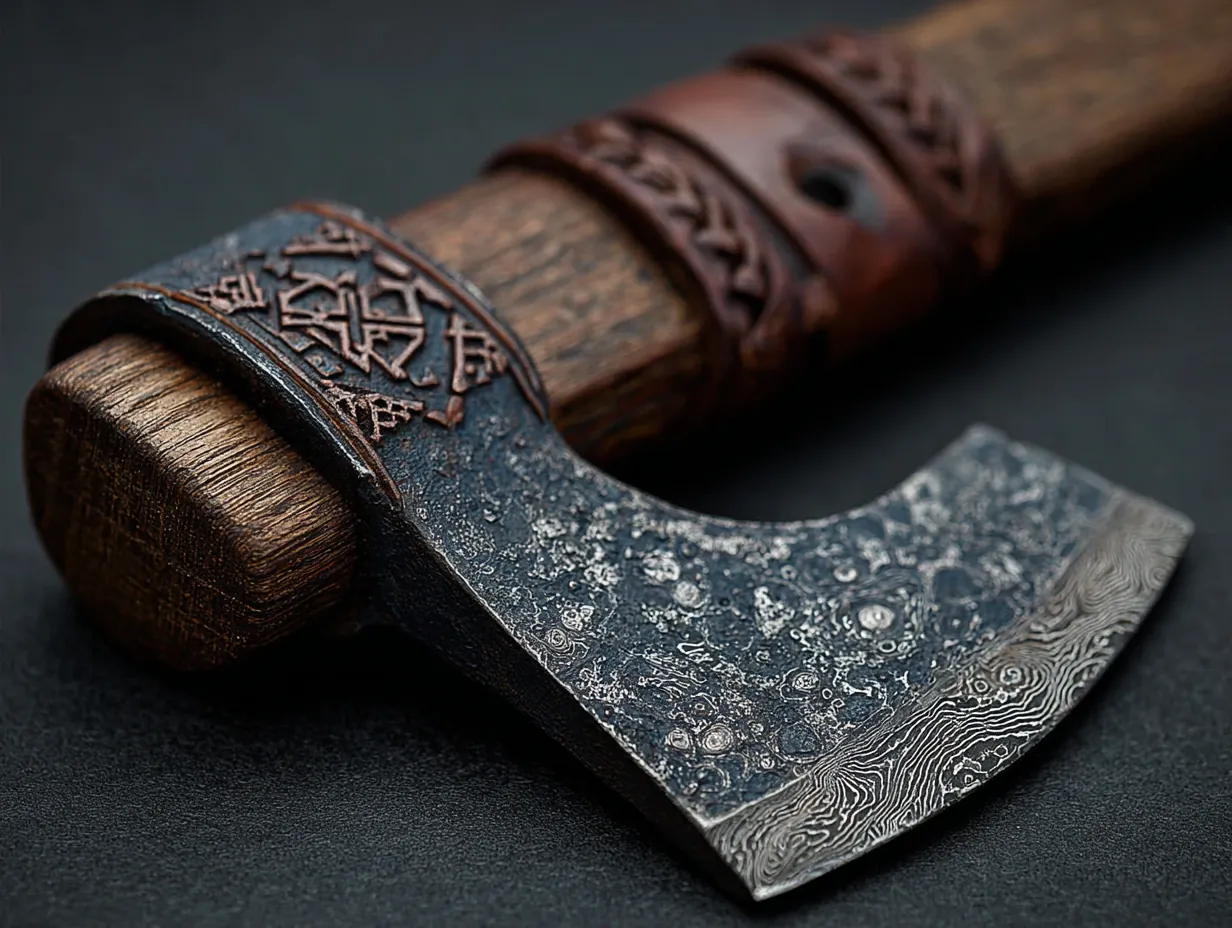
Viking battle axe weapon design: - Damascus steel axe head with pattern welding - Intricate Norse knotwork engravings - Aged oak handle with leather wrapping - Weathered and battle-worn appearance - Dramatic side lighting on dark background --ar 16:9 --v 5 --s 500
Key Elements
- Damascus steel axe head with pattern welding
- Intricate Norse knotwork engravings
- Aged oak handle with leather wrapping
- Weathered and battle-worn appearance
- Dramatic side lighting on dark background
Japanese Katana
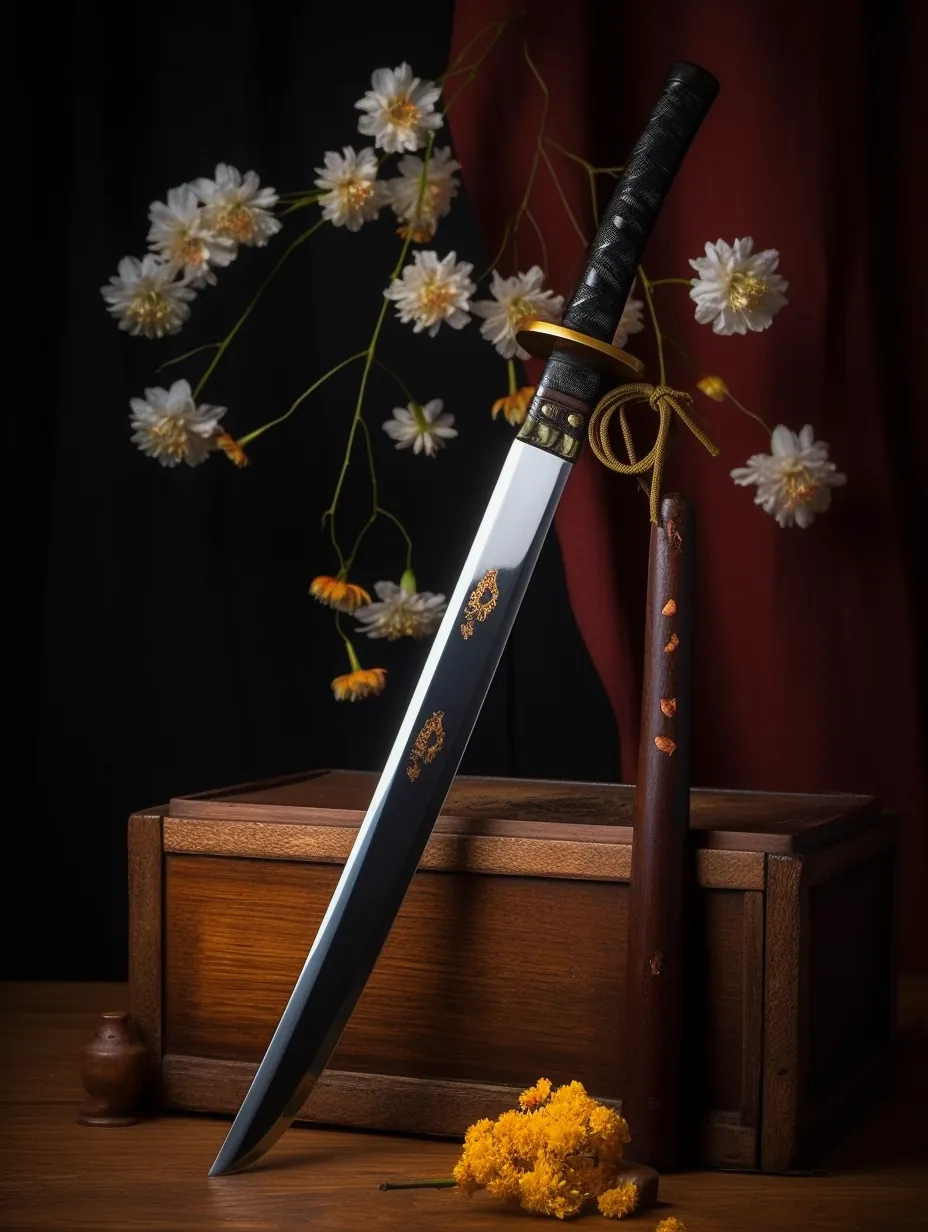
Traditional Japanese katana: - Folded tamahagane steel blade with hamon line - Ray skin handle with silk ito wrap - Ornate iron tsuba with cherry blossom motif - Lacquered wooden saya (scabbard) - Soft diffused lighting, zen aesthetic --ar 16:9 --v 5 --q 2
Key Elements
- Folded tamahagane steel blade with hamon line
- Ray skin handle with silk ito wrap
- Ornate iron tsuba with cherry blossom motif
- Lacquered wooden saya (scabbard)
- Soft diffused lighting, zen aesthetic
Material & Finish
Material and surface treatment are crucial for realistic weapon renders.
Metal Types
- Damascus steel (layered patterns, organic waves)
- Polished chrome (mirror finish, sharp reflections)
- Brushed steel (directional grain, matte sheen)
- Blackened iron (dark oxide, subtle highlights)
- Mythril/fantasy metals (ethereal glow, impossible properties)
Surface Treatments
- Engravings (decorative patterns, text, symbols)
- Patina (aged appearance, oxidation)
- Gilding (gold inlay, precious metal accents)
- Lacquer (glossy protective coating)
- Battle damage (scratches, dents, wear marks)
Note:
Mixing material types adds visual interest. A weapon might combine polished blade steel with aged leather grip and gold inlay details.
Lighting Techniques
Lighting defines the mood and showcases weapon details.
Studio Setups
- Rim lighting (edge definition, dramatic silhouettes)
- Key light with fill (balanced, detailed renders)
- Single dramatic spot (high contrast, cinematic)
- Soft diffused (even illumination, product photography)
Environmental Lighting
- Forge fire (warm orange glow, atmospheric)
- Moonlight (cool blue, mystical mood)
- Energy glow (self-illuminating, sci-fi aesthetic)
- Natural daylight (realistic, neutral colors)
Common Mistakes
Design Issues
- Unrealistic proportions (blades too thick, handles too short)
- Impractical features (cannot be gripped or wielded)
- Inconsistent style (mixing incompatible eras)
- Over-decorated (too many competing details)
Technical Problems
- Poor material definition (unclear what it's made of)
- Flat lighting (no depth or dimension)
- Missing key details (no grip texture, blank surfaces)
- Scale confusion (size unclear without reference)
Note:
Research real weapons before designing. Understanding how historical weapons were made and used improves the believability of your concepts.
Tips for Success
Planning
- Study historical weapon references
- Define the weapon's purpose and user
- Plan material palette and finish
- Establish the era or setting
Execution
- Focus on silhouette first
- Add defining details progressively
- Balance decoration with function
- Consider weight and balance visually
Refinement
- Check proportions against references
- Verify material properties are consistent
- Ensure details are visible but not overwhelming
- Test different lighting angles
Weapon Design Process
Concept Development
Begin with your weapon concept:
- Define weapon type and purpose
- Establish era or setting
- Plan key design features
- Choose material palette
- Select lighting approach
Prompt Creation
Structure your weapon prompt:
- Describe weapon type clearly
- Specify materials and finishes
- Detail decorative elements
- Include special effects if any
- Set environment and lighting
Refinement
Perfect your weapon design:
- Analyze initial results
- Adjust proportions if needed
- Fine-tune material details
- Enhance lighting and shadows
- Perfect surface details
Conclusion
Mastering weapon design in Midjourney requires understanding weapon mechanics, historical accuracy, and visual aesthetics. Use these templates as a foundation, then experiment to develop your unique weapon design style. For further exploration, consider other Midjourney object prompts to expand your creative portfolio.
Related Articles & Guides
 #Midjourney
Midjourney Style Reference (SREF) Guide: Codes & Examples
Master Midjourney's SREF feature to apply consistent artistic styles. Learn parameters, best practices, and discover curated style collections for your art.
 #Midjourney
Midjourney Character Creation: Master AI Prompts for Unique Designs
Master Midjourney character creation with AI prompts. Learn advanced techniques for generating compelling characters across diverse styles and genres, from portraits to fantasy beings, with detailed guides and examples.
#MidjourneyMastering Character Portraits in Midjourney: Techniques, Styles, and Prompts
Create stunning character portraits with Midjourney using advanced prompts, lighting techniques, and artistic parameters. Explore photorealistic, artistic, fantasy, and vintage portrait styles.